Although checking that the choice of methods and data by each Party in its inventory is necessarily done at a category-specific level, there is some general guidance that should prove useful to you.
First, when reviewing individual source or sink categories (or sub-categories), you should refer to the IPCC Good Practice Guidance decision trees to help guide you as to the appropriateness of the choices made by the Party. It may be useful to compare the data and method choices made by each Party to the output boxes of the IPCC Good Practice Guidance decision trees. In general, higher tier methods (with their associated more detailed data) should be used for Key Categories, unless resources are unavailable. This caveat is reflected in most IPCC Good Practice Guidance decision trees.
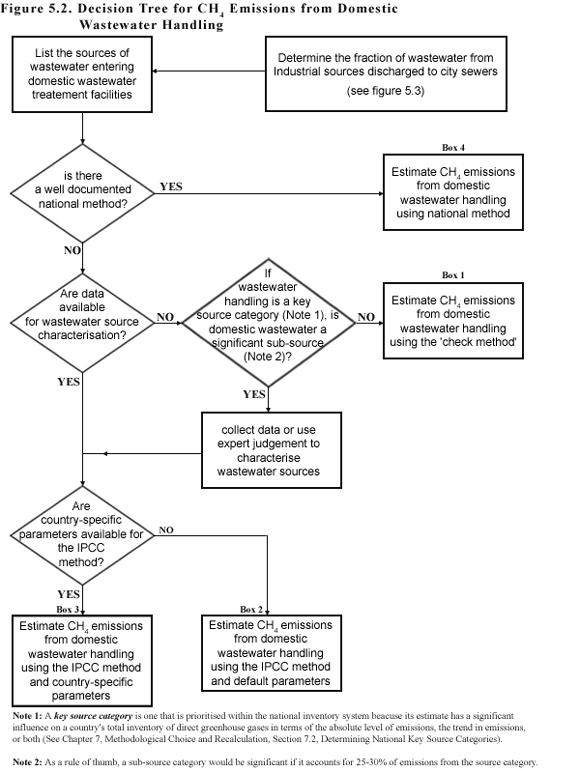
However, you should also consider that the IPCC Good Practice Guidance allows Parties flexibility in the choice of the method and data they use for each source and sink category, according to their national circumstances.
Using the IPCC Good Practice Guidance in combination with your own expert judgment, it is your responsibility as a reviewer to determine whether the choices made by Party are in keeping with the TACCC criteria. You should document and report on cases where a Party’s resource or other constraints (e.g., limited data) have appeared to prevent it from preparing high quality estimates.
Click
here to go to exercises on this topic.