| |
g. The fifth step is the multiplication by an oxidation factor to account for the
small amount of unoxidized carbon that is left in ash or soot.
Parties should use oxidation factors that match their national
circumstances.
Several countries have commented that the amount of carbon
remaining unoxidized is highly variable, and in any case more
variable than indicated by the general 1% assumption across
all oil-related fuels. For example, it has been noted that
the amount of unburnt carbon varies depending on several factors,
including type of fuel consumed, type of combustion technology,
age of the equipment, and operation and maintenance practices. Recent research has found that in modern efficient natural gas and gasoline engines, the oxidization factor is approximately 100 percent.
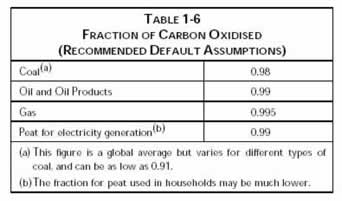
When national oxidation factors are not available, the ultimate
option is to use the following IPCC default factors:
Table
1-6. Fraction of Carbon Oxidised |